Case study · Hosting & instrumentation
B&F Ceramics
195 enquiries, and nothing driving traffic.
We host this site and we instrument it. We do not run its marketing. This is a log of what the instrumentation found, and why that is the whole argument.
Enquiries captured & attributed
195
▲ three forms · every one page-attributed
Traffic programme running
None
No SEO, content or ads engagement
States the enquiries came from
~20
In the 40 most recent, reviewed by hand
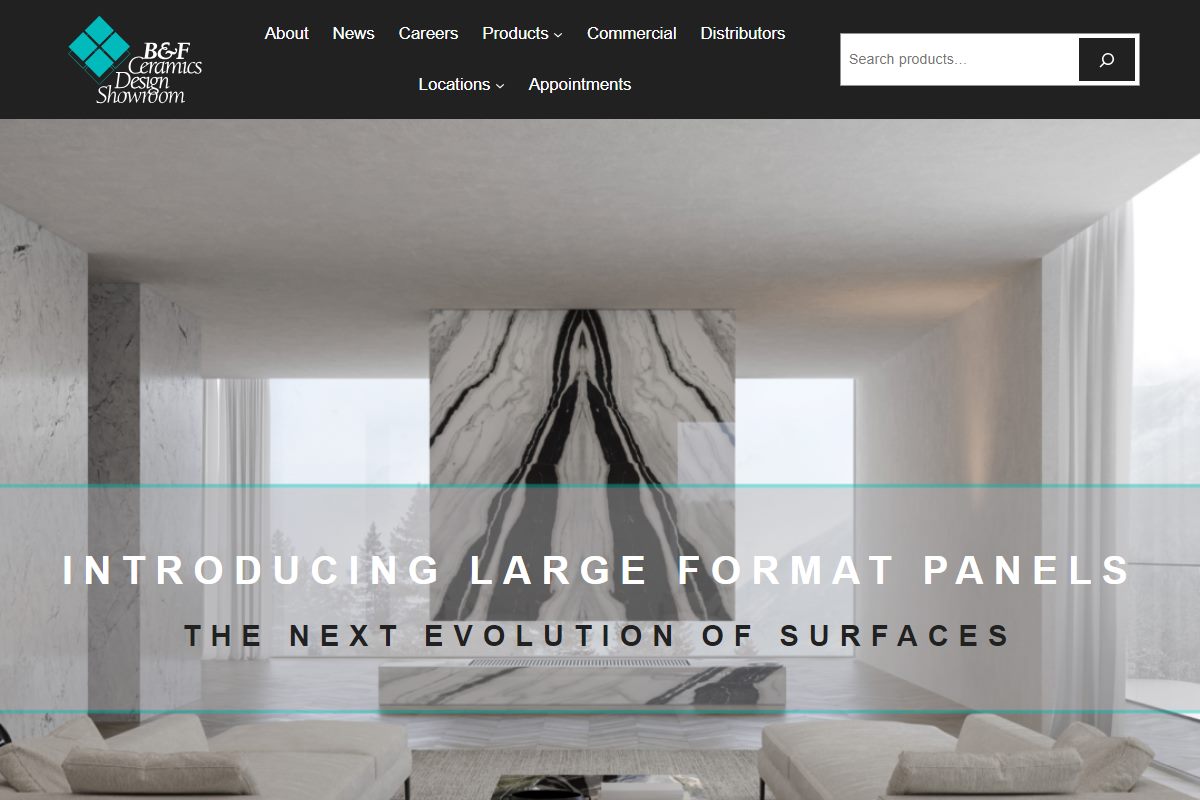
bfceramics.com · their catalogue, on our managed hosting

/distributors/ · the dealer form — captured by Orbit with per-page attribution
A catalogue that was already working, and nobody could prove it.
B&F Ceramics supplies tile and engineered stone — Sundara, Corrado Stone, Hyde Park, Marmiline — through showrooms, flooring dealers and commercial specifiers. The buyer is a dealer deciding what to stock or an architect deciding what to specify, almost never a homeowner.
Their catalogue was already earning its keep in search before we were involved, and it still is: collection pages ranking on their own product names, a homepage pulling the largest single share of clicks. That is their asset, built by them. What did not exist was any way to see what it produced. Enquiries arrived in an inbox with no record of which page sent them.
An operator’s log records what it left alone. We left the catalogue alone.
What we actually did: made the site legible.
B&F is on managed hosting. Voyager Orbit ships with it, so every WPForms submission on the site is captured with the page that produced it, the referrer that brought the visitor, and the device they were on. Three separate forms, three separate intents: Become or Find a Dealer on the distributors page, Contact Commercial Sales for specifiers, and a per-location enquiry form on each showroom page. That is the entirety of our footprint on this site, and it is the reason the rest of this page can say anything at all.
None. That is the finding.
This is where a case study normally lists what the agency changed. Here the list is empty, and printing it empty is the point.
We have not run an SEO programme for B&F. We have not written their content, restructured their catalogue, or bid on a keyword. Every search position on the next page is theirs. The only thing we introduced was the ability to count.
What the counting found.
195 form submissions have been captured and attributed. We read the forty most recent one at a time rather than trusting the total: every one is a real business — flooring dealers, architects, design-build firms, contract carpet houses — spread across roughly twenty states from Texas to Massachusetts. None were test or QA submissions. They arrive from Google, Bing and Yahoo, and one came by way of ChatGPT.
There is no before-and-after here, because there was no intervention to measure. What follows is context, and it belongs to B&F: over the trailing 90 days the site took 3,406 search clicks at a 9.92% click-through rate. Collection pages do the heavy lifting — Sundara at 27.2% click-through from an average position of 3.7, Corrado Stone at 26.5% from 4.6, against the homepage’s 16.7% from 7.8. Impressions fell 31% across the same window while clicks stayed flat, which reads as a narrowing rather than a decline.
We built the gauge and then didn’t read it.
The instrumentation had been reporting a healthy, steady stream of qualified trade enquiries for a long time before anyone looked hard at it. A site converting this well with nothing driving traffic to it is the clearest possible signal that traffic is the constraint — and we should have raised that with B&F when the count crossed a hundred, not after it passed a hundred and ninety. Measurement you don’t act on is just tidier ignorance.